

Ford CEO Warns Chinese Automakers Could Enter U.S. Market Within a Decade
Jim Farley tells employees to prepare for escalating competition as China's automotive industry eyes American expansion

Published on Aug 3, 2026

Quick Take
- Ford CEO Jim Farley has warned employees that Chinese automakers could enter the U.S. market in the next ten years
- The warning underscores Ford's ongoing concerns about competitive pressure from Chinese manufacturers
- Ford has previously stated that China represents a significant competitive threat to American automakers
- The timeline suggests domestic automakers have less than a decade to fortify their market position
What Happened
Ford Motor Company CEO Jim Farley has issued an internal warning to employees about the potential arrival of Chinese automakers in the United States market, setting a timeline of within the next decade for this competitive shift.
The communication to staff represents a continuation of Ford's public positioning on Chinese automotive competition. The company has previously characterized the competitive threat from China in stark terms, stating that Chinese manufacturers are "on America's doorstep."
While the exact context and forum of Farley's employee communication were not specified in available reporting, the message signals that Ford's executive leadership is actively preparing the workforce for what it views as an inevitable expansion of Chinese automotive brands into the domestic American market.
The warning comes at a time when Chinese automakers have been rapidly expanding their global footprint, particularly in European and emerging markets, though they have yet to establish a significant direct presence in the United States beyond niche or commercial vehicle segments.
Why It Matters
Industry Implications
Farley's warning carries weight beyond internal Ford communications. It reflects a broader recognition within the American automotive industry that Chinese manufacturers — which have achieved significant scale, technological advancement, and cost efficiency — represent a fundamentally different competitive challenge than traditional rivals from Japan, Germany, or South Korea.
Chinese automakers have invested heavily in electric vehicle technology, battery production, and software-defined vehicle architectures. Companies like BYD have surpassed established players in EV sales volumes globally, demonstrating manufacturing prowess and economies of scale that could prove formidable if deployed in the U.S. market.
The ten-year timeline Farley cited is significant for several reasons. It suggests Ford believes current barriers to entry — including tariffs, regulatory requirements, and the need to establish distribution networks — will either erode or be overcome within that window. It also implies that Ford views this timeframe as critical for strengthening its own competitive position before facing direct competition on home turf.
For the broader American automotive industry, which has already struggled with the transition to electric vehicles and faces substantial investments in retooling manufacturing, the prospect of well-capitalized Chinese competitors entering the market adds another layer of strategic complexity.
Market Context
Ford's concerns about Chinese competition are not new but appear to be intensifying. The company operates manufacturing facilities in China and has direct experience with the capabilities and competitive dynamics of Chinese automakers in that market.
Currently, Chinese-branded passenger vehicles have minimal presence in the United States, largely due to tariffs, regulatory barriers, and the absence of established dealer networks. However, Chinese manufacturers have made inroads in other ways — through partnerships, component supply, and in commercial vehicle segments.
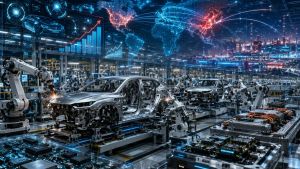
The image referenced in the source material shows a Ford production line in Dearborn, Michigan, symbolizing the domestic manufacturing base that American automakers are working to defend against international competition.
Background: Chinese Automotive Industry Growth
Over the past two decades, China has grown from a nascent automotive market to the world's largest, both in terms of production and sales. Chinese manufacturers initially focused on domestic consumption but have increasingly turned to export markets. Companies like BYD, Geely, and SAIC have acquired foreign brands, invested in advanced technologies, and built production capacity that rivals or exceeds traditional automotive powers.
In electric vehicles specifically, Chinese brands have achieved significant technological parity or leadership in areas like battery chemistry, electric drivetrains, and vehicle software — domains that are increasingly central to automotive competitiveness.
What's Next
Based on Farley's warning, Ford appears to be entering a period of strategic preparation. While specific defensive measures were not detailed in the available reporting, typical responses from incumbent automakers facing new competition include:
- Accelerating investment in product development, particularly in electric vehicles and software
- Seeking to maintain or strengthen trade protections and regulatory barriers
- Improving cost competitiveness through manufacturing efficiency and supply chain optimization
- Strengthening brand loyalty and dealer networks before new entrants can establish distribution
The ten-year timeline also suggests Ford may use this period to lobby for policy measures that protect domestic manufacturing or level the competitive playing field, such as requirements for local production, labor standards, or cybersecurity regulations for connected vehicles.
For employees receiving Farley's message, the subtext is clear: the company anticipates a more competitive future and is signaling the need for operational excellence and adaptation in the years ahead.
Frequently Asked Questions
Are Chinese cars currently sold in the United States?
Chinese-branded passenger vehicles have minimal presence in the U.S. market currently. While some Chinese manufacturers have explored entry (and a few commercial or niche vehicles are available), no major Chinese automaker has established a significant direct retail presence for passenger cars in the United States as of the date of this reporting.
What barriers prevent Chinese automakers from entering the U.S. market?
Multiple barriers exist, including substantial tariffs on imported Chinese vehicles, stringent U.S. safety and emissions regulations that require certification, the need to establish dealer networks and service infrastructure, and brand recognition challenges. Additionally, geopolitical tensions and concerns about data privacy in connected vehicles add regulatory complexity.
Why is Ford specifically concerned about Chinese competition?
Ford operates in China and has direct visibility into Chinese manufacturers' capabilities, particularly in electric vehicles and cost efficiency. The company has observed Chinese automakers' rapid technological advancement and scale, leading to repeated warnings that China represents a significant competitive threat. Ford's statements suggest it views Chinese manufacturers as fundamentally more formidable than previous waves of international competition.
What is Ford doing to prepare for Chinese competition?
The available reporting indicates Farley has warned employees about the timeline but does not detail specific strategic countermeasures. Typically, such preparation would involve accelerating EV development, improving cost competitiveness, and strengthening market position, but specific Ford initiatives were not disclosed in the source material.
Could Chinese automakers enter the U.S. market sooner than ten years?
Farley's timeline of "within the next decade" suggests he views entry as possible anytime in the next ten years, not necessarily at the end of that period. The actual timing would depend on evolving trade policies, regulatory changes, strategic decisions by Chinese manufacturers, and their success in establishing distribution channels. The ten-year window appears to represent Ford's planning horizon rather than a precise prediction.
Source Notes
This report is based on coverage of CEO Jim Farley's communication to Ford employees regarding Chinese automotive competition. The image credit references Bloomberg reporting. No additional external source URLs were provided in the original material.
Ad Disclosure: This site may feature sponsored content and affiliate links. All advertisements are clearly labeled, and ad partners have no influence over our editorial content.

Related Articles

Major Japanese Automakers Suspend Production After Deadly Southwestern Earthquake
Toyota, Lexus, Mitsubishi, Nissan, and Honda halt production following July 28 earthquake in southwestern Japan that disrupted critical automotive suppliers Aisin, Astemo, and Renesas.
Chery's $75M KG Mobility Investment Signals China's Push Into Global Auto Manufacturing Networks
Chinese automaker Chery invests $75 million in South Korea's KG Mobility through convertible bonds, potentially securing 10% stake while eyeing global production capacity sharing and U.S. market entry.

BMW iX1 review
The BMW iX1 blends sharp handling and a premium cabin, but falls short on range and charging speed. Full 2026 review, pricing, and verdict.